Ben Whishaw Comes Out: Do We Care?

‘Skyfall’ Actor Ben Whishaw Officially Comes Out As Gay, Reveals He Is Married.

In a statement obtained by the Daily Mail over the weekend, Whishaw’s rep confirmed the actor is gay and has been married to his partner, Australian composer Mark Bradshaw, for a year now.

“Ben has never hidden his sexuality, but like many actors he prefers not to discuss his family or life outside of his work,” his spokesman said Friday night. “Due to speculation, I can confirm that Ben and Mark entered into a civil partnership in August 2012. They were proud to do so and are very happy.”

ben-whishaw-bbcamer

Ben Whishaw as Freddie Lyon in “The Hour,” the period drama from the BBC about newsgathering in the 1950s. The Beeb cancelled the show after two series, sadly, but it was great TV. For many in the U.S., “The Hour” was the first real introduction to Whishaw’s many talents. | Image: BBC

There’s part of me that’s happy about this. There’s another part of me that just thinks it’s not a big deal and, frankly, none of my business or anyone else’s.

I’m conflicted, I suppose. I believe that it is so very important for LGBT equality that people realize how many people live their lives vibrantly and openly and how that polyglot makes this a richer world.

But ….

I don’t know if I really need to know who Ben Whishaw sleeps with or is married to. It just has no relevance. He’s a fine, fine actor. He was great in the last James Bond flick, picking up the mantle of “Q” seamlessly from John Cleese and the magnificent Desmond Llewellyn. He was mesmerizing as Freddie Lyon in two seasons of the BBC drama “The Hour” and he was captivating as Sebastian Flyte in a less-than-stellar take on Evelyn Waugh’s “Brideshead Revisited.”

Is he less or more captivating because we know that the performer under the artifice is gay? My belief is that if he’s a fine actor, everything — everything — else is completely irrelevant.

Well, anyway, good on ya, Ben. I wish you, your husband, and your fabulous head of hair all the happiness in the world!

Glee’s Cory Monteith Dead at 31

Sad.

Cory Monteith

Glee star Monteith. The Canadian star was found dead in a Vancouver hotel at age 31. | Image: Chris Pizzello/AP

By Associated Press, Updated: Sunday, July 14, 4:10 AM
via The Washington Post
VANCOUVER, British Columbia — Cory Monteith, the handsome young actor who shot to fame in the hit TV series “Glee” but was beset by addiction struggles so fierce that he once said he was lucky to be alive, was found dead in a hotel room, police said. He was 31.

Monteith, who played the character Finn Hudson on the Fox TV series about a high school glee club, was found dead in his room on the 21st floor of the Fairmont Pacific Rim Hotel on Vancouver’s waterfront at about noon Saturday, according to police.

Deputy Police Chief Doug Lepard said there was no indication of foul play. Monteith’s body was found by hotel staff after he missed his check-out time, Lepard said.
“We do not have a great deal of information as to cause of death,” Coroner Lisa Lapointe said.

Lepard said Monteith had been out with people earlier and that those people are being interviewed.

Charm of DAYS’ Gay Supercouple “Cannot be Denied”

Whether or not the sand runs out on Will and Sonny is up to the writers and others involved. There is word (though not officially confirmed by the actor) that Massey doesn’t plan on returning to Salem after his contract runs out this December. Still, fans can currently enjoy the ups-and-downs of one of (if not the biggest) daytime television power couple. Even if you are not a fan of Days of our Lives or soaps in general, the presence, power, and charm of the couple cannot be denied.

via Andrew Benkovic: The Daytime TV Power Couple That May (or May Not) Surprise You.

I agree. Benkovic’s piece on HuffPo is good, especially given that he’s very upfront about not being a longtime Days of Our Lives fan — or soap fan in general.

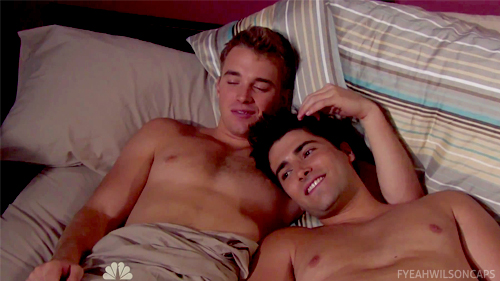
GAYTASTIC — Will Horton (Chandler Massey, left) and Sonny Kiriakis (Freddie Smith, right) have emerged as one of the most popular couples on the NBC daytime serial “Days of Our Lives.” Powerful and immensely likable performers, Massey has received three Emmy nominations and Smith was nominated in 2013. Massey won in 2012 and 2013.

The latest machinations with Adrienne talking trash and Will doubting himself and doubting Sonny’s commitment to Will and the baby have served to derail the post-partem/post-gunshot euphoria the duo has been experiencing of late, but I think it’s a good little ripple — even though I want to backhand Will sometimes — and it serves to reinforce the idea that Will’s self-confidence is only about an inch deep. I mean, if Sami Brady was your mother, how confident would you be?

Lots of drama on the boards right now about Chandler Massey leaving after his contract expires. I’ll take that with a grain of salt right now. NBC and Ted Corday would be damn fools to let him walk away when he’s one of the most popular characters on the show right now and soaps are no longer a dime a dozen. Given taping schedules, we’re likely to see him full time until next March or April. Smart producers would throw money at him and work around his college schedule by back-burnering his story for six months at a time. Plus, you keep Freddie Smith in the forefront and, other than making ME happy, it reminds the audience of the importance of the couple to the Salem landscape. And besides, we’ve never had a long-term gay couple on soaps — and no, Noah and Luke don’t really count as long-term, as much as I loved them — and we need one.

Also, Freddie alluded to something in an interview a while back and I’m interested to see what transpires. Watch this space in October. We’ll see if I’m right!

(Click around here, if you’re interested in this; it’s been one of my favorite subjects of late.)

Little Gay Movie Makes Big Splash, Baby – er – Gayby

How A Gay Indie Movie Made A Giant Splash During Pride Week.

Halle Berry, Steve Carell and Jim Carrey, Jason Statham, James Franco and Mila Kunis, and Melissa McCarthy. They’ve all got movies atop the top of the iTunes charts right now. Familiar names and the usual suspect of movie stars. And then there’s… Matthew Wilkas in something called Gayby?

This week, Apple selected the little independent movie as its Movie of the Week on iTunes, giving prominent spotlight and promotion to director Jonathan Lisecki’s comedy about a straight woman, her gay male best friend, and their quest to have a child together.

NY-BY398_NYGAYB_G_20121011172942

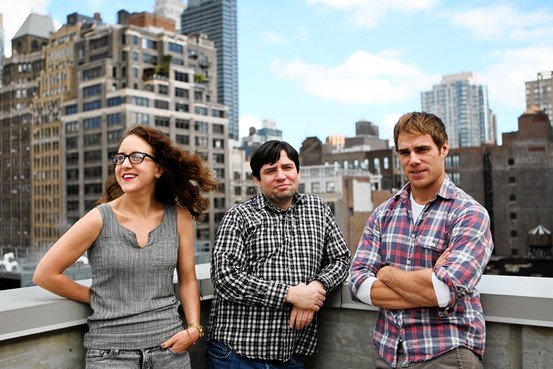
Jenn Harris, Jonathan Lisecki and Matthew Wilkas of Gayby, the quirky “half-gay” comedy that’s taking iTunes by storm. | Image: Daniella Zalcman for The Wall Street Journal

I’m a natural born cynic. I’m just sayin.’ So, when I first heard the premise of this movie last year, the first thing I did was roll my eyes. Then I watched a trailer, because, well, that takes no investment at all. And I liked it. Then I watched the damn movie.

To my utter shock, I LOVED IT! I just loved every second of it. It’s witty, the actors are great, the direction and writing are tight. Writer/Director/Actor/Gay-of-all-Trades Jonathan Lisecki is utterly and completely charming as the BFF.

I am not surprised it’s gone gaga on iTunes. It’s a fabulous film — and proof, yet again, that the real talent lies with the crowd-funded Indie dudes (and dudettes) and not in the well-heeled hallways of Hollywood.

Oh, Myyy — Takei, Quinto, and I, Borg: A Long Journey into the Gay Recesses of Deep Space and the Soul

This is a terrific quote by gay icon and social media zeitmeister George Takei. This jump takes you to the Backlot, but it’s source is really the Huffington Post.

c18eefq1

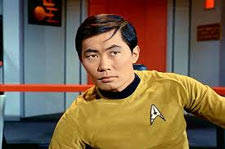
Takei on Star Trek: TOS, before he charted a course for icon staus.

“Some of the cast and creatives were aware that I was gay, and I did, on occasion, bring a male date to parties. Star Trek creator Gene Roddenberry was aware of my sexual orientation and very supportive. That was the extraordinary thing about Star Trek. That we were a diverse crew of people representing so many colors, backgrounds and heritages. That was the promise of the future. And, now, in the J.J. Abrams reboot, an openly gay actor is playing a Vulcan in love with an African American. I’m not really surprised by this. Star Trek taught us to look ahead to a time where Dr. Martin Luther King, Jr.‘s dream was fulfilled. Being a part of that vision was — and has remained — a tremendous honor.”

via Meme: Gene Roddenberry Knew George Takei Was Gay During “Star Trek,” Justice Kennedy Denies Motion On Prop 8 Stay, Putin Signs Gay Propaganda Law – thebacklot.com.

And, ultimately, that’s why I’ve always loved Star Trek. The deep understanding of humanity that Roddenberry infused the series with was so important in effecting change in our culture over time. It’s place in the cultural landscape of the Western world cannot be ignored — even if you don’t give a crap about stories of space cowboys and turtle-headed aliens.

(And we won’t even get into the stories about the ST geeks who developed flip-phone and Bluetooth earpieces because they designed them to look like tricorders and Uhura’s audio receiver. [“Captain, I’m receiving a subspace transmission from the Vulcan High Command. It’s a distress call!”])

tumblr_mavi9yOFMQ1qmuyt5o1_500

Great photo of Del Arco, which prompts a remembrance of his iconic role as Hugh the Borg on ST:TNG and the fight for equality. (Seriously, if you don’t know what I’m taking about, just find the damn episode!)

All Trek fans have their personal favorite series. Mine was Star Trek: The Next Generation (TNG). It was clunky and, frankly, downright bad for the first couple of seasons, but then it got extremely good.  My favorite TNG episode of all time was one called, “I, Borg” (here’s a clip) about a Borg becoming it’s own entity (you have to know what the Borg are, but go with it). It was a breathtaking, beautiful story about the importance of being different, of standing apart from the collective, of saying that there is difference and there should be acceptance.

1010259_613541688664297_1823279998_n

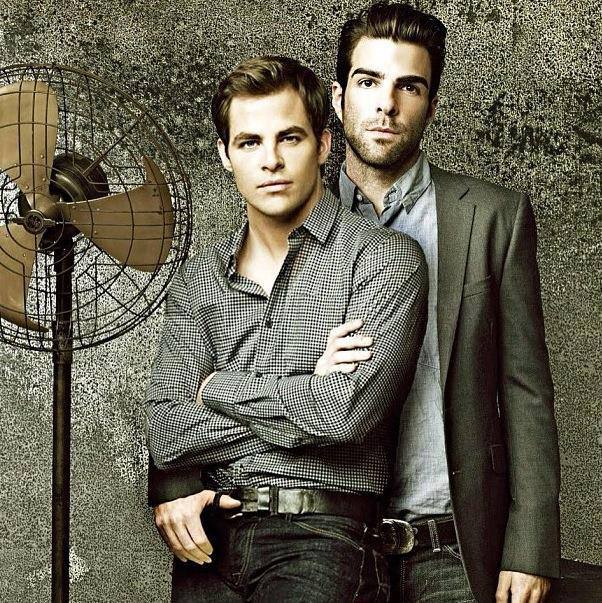
Chris Pine and Zachary Quinto. Their “deep space bromance” is chronicled in OUT magazine. There is obviously a high hotness score required to get into Starfleet Academy these days!

The singular Borg was played by a marvelous actor named Jonathan Del Arco. He’s an out gay man who is a passionate LGBT activist as well as an actor. Catch him on TNT’s terrific Major Crimes as Dr. Morales.

That’s a long way around the track to get to the point, which is shown so beautifully in the photograph at right. We have gone through so much to get to a world here today’s Capt. Kirk and Mr. Spock look like this. Their on-and-off-screen “bromance” is chronicled in a great article in OUT magazine.  In the article, Zachary Quinto talks about how intelligent Chris Pine is and how he infuses all of his characterizations with that intelligence. And, ultimately, that’s why I think Pine’s so damn sexy. I mean, the abs are nothing to sneeze at, but ya gotta have a brain! Oh, myyy, indeed!

Cady McClain, the Decline of American TV Soaps, and Other Stuff

Here’s a link to a great article by All My Children’s Cady McClain about the decline of soap operas on American television. Alert readers will know that this is a topic that I broach with some frequency because, in all incarnations of my life, I have been and continue to be a storyteller. And one of the best ways to connect with your audience and tell important stories is using the serial format.

I have a lot to say on this topic, but I’ll save it for another day. Read Cady’s piece. She’s bang on; absolutely bang on.

As for the haters that are drawn to comment on her piece (which she tweeted about), I offer up this great piece on the subject courtesy of Mashable. I originally posted it a few months back.

Finally, below I am reposting a piece I did for Salon back in 2010 when As The World Turns was going off the air. It touches on some similar themes and also Cady and I quote from one of the same sources, Robert Allen, who wrote the terrific book, Speaking of Soap Operas, back in the 80s! All great minds…..?

P.S. In re-reading the piece below, it occurs to me that I’ve used the Schemering quote in more recent pieces. I should research more deeply. Still — it’s a great quote!

_____________________________________

LOSING OUR STORIES
On Friday, September 17, 2010, the soap opera As The World Turns goes off the air after a run of 54 years. A significant event? Yes, I think it is.

“We are a narrative species,” wrote Roger Rosenblatt in Time a decade ago. “We exist by storytelling — by relating our situations — and the test of our evolution may lie in getting the story right.”

I have always found true profundity in that quote and I have gone back to it hundreds of times because all of us relate to students, to colleagues, to friends, acquaintances and strangers, by telling our stories. And I often wonder if a generation gap is not widening because our outlets for teaching young people how to develop, expand and express their own stories have severely diminished in recent decades.

By way of example, we seem to be reaching the bitter end of serialized storytelling, something which can be dated back more than 500 years to Persian storytellers. Serial fiction became wildly popular in the 19th century with Charles Dickens, most famously, and other authors who published stories in magazines by installment. In the U.S., serialized stories began to be broadcast daily on radio in the 1930s. Derisively called soap operas, as most were sponsored by household products manufacturers and featured overly dramatic plots, they fast became the chief escapist fare for an audience of millions; most of whom were women.

If not the originator of the idea, certainly the most prolific purveyor of soap opera was Irna Phillips, an iron-willed, opinionated genius who acted-out her stories for a secretary to transcribe in lieu of literally putting pen to paper.

Character First
When Phillips created As The World Turns in 1956, it fast became the number one drama in America and stayed at that top spot for more than two decades. In writing about the program, Robert LaGuardia called Phillips “ahead of her time. … Irna saw daytime drama in terms of time and character, rather than story. She understood something that only loyal soap fans truly know: that people want to become involved with the lives of other people. … Story to Irna was simply a vehicle; it was from the moment-to-moment emotions of her characters, expressed to each other in quiet scenes, that viewers derived true vicarious pleasure.”

Soap operas exploded thanks to the advent of television and at the height of their reach some 30 years ago, daytime dramas reached a staggering 50 million viewers a week and raked in more than $700 million in profit annually. The size of the soap audience, argued essayist Robert C. Allen, made the programs “a significant cultural phenomenon.”

In the often laconic pacing of daily serials, audiences get to know characters on a level more intimate than in episodic storytelling and their emotional investment in those characters intensifies. The late Christopher Schemering, a journalist devoted to daytime drama, once noted that “as characterizations grow and the narrative stretches out over months and years and becomes more complex and ambiguous, one’s involvement deepens, forcing one to come to terms with the quirks of human nature, the darker sides of fundamentally good people. And thus there is the possibility of the viewer experiencing something new or complex or feeling some way he has never felt before.”

Theatre practitioners often say that the purpose of the art form is to illuminate the human condition and, arguably, soap opera’s true calling may be exactly the same.

Old-Fashioned Relevance
While many soaps have been derided over the years for outlandish plots, poor writing and occasional injections of science fiction or utter madness, As The World Turns remained relevant, said Schemering, because it told “powerful stories slowly and surely. The show was old-fashioned in the best sense of the word.” LaGuardia called it the “most historically important soap opera in modern times.”

In its early years, the show introduced what is believed to be the first illegitimate child on television and though the show was never considered cutting-edge like the early days of All My Children — where a young Erica Kane had television’s first legal abortion — the show did not shirk from the exploration of social issues. Over the years, alcoholism, cancer, adoption, racism, Alzheimer’s disease, and many other issues have been mined for stories.

Margo’s Rape
In the early 1990s on As The World Turns, the rape of police detective Margo Hughes was allowed to play out in real time. The character, who had to wait six months before she could take a test to determine if she had contracted HIV/AIDS from her rapist, was allowed to explore her own emotions, those of her husband, family and colleagues, and the impact her rape had on everyone in her life in a way that mirrored what happens in the real world. Nearly 20 years after this story first aired, actress Ellen Dolan says that it remains a touchstone for long-time viewers.

Luke’s Coming Out
The show has also, in recent years, been lauded for its long-term treatment of Luke Snyder’s homosexuality and its sensitive portrayal of young gay men. When the teenager came out to friends and family, he was met with both acceptance and derision, often from surprising or unexpected sources, but the character was allowed to hold to his own truth and the story showed the long-term positive effects of that truth-telling on members of the community.

And while soaps can be innovative and forward thinking, they can also be prudish. When the character of Luke fell in love with Noah Mayer, a young man with a completely different, harsher and occasionally frightening coming out story, the two finally shared daytime’s first gay male kiss — nearly a decade into the 21st century.

A gripping story such as Margo’s rape showed millions of women how one woman, married with children, reacted to such an unspeakable act and how it impacted her life. Luke and Noah’s story was written with intense courage and deep feeling and showed how one town accepted and embraced people who may have been different. Both stories allowed viewers, some of whom may not have had other avenues in which to explore them, new and potentially empowering ways to confront difference and prejudice and violence in their own lives.

A Real American Drama
Nearly 50 years ago, playwright William Inge said that while people may sneer at soap operas, they have “a basis for a truer, more meaningful drama. … I feel that in soap opera we have the roots for a native American drama.” Inge may have been right, but he could not have foretold the societal shifts that have occurred over the last three decades that has pushed the soap opera onto a cultural endangered species list.

Soap opera viewership is down a staggering 30 million weekly viewers since the mid-1980s and the number of dramas on the air has shrunk by more than half as well. The news from the Nielsen ratings continue to show a continuing sharp decline across all daytime dramatic programs in women viewers 18-49, the bread and butter demographic for soaps. In an era when working outside of the home is the norm rather than the exception for both genders, when DVR’s have released viewing from time constraints and online video has even freed it from TV sets, the soap audience has dwindled and is increasingly split between older viewers and teenagers; neither is a group that excites daytime’s traditional advertisers.

“There are two universal human needs or motives,” a colleague of mine wrote recently, “the need to know and the need to belong.”

That’s as important, I believe, as Rosenblatt’s assertion that “[w]e exist by storytelling.”

If Rosenblatt is correct, what becomes of a society that loses its stories? What happens to people who forget who they are or where they came from or who their ancestors were or how they deal with fellow citizens in a crisis? How do we write our history if we have no stories to tell? If there is a primal need for knowledge and belonging — and I fervently believe that there is — how can we satisfy that need if no one tells us our own story? How do we move forward if we cannot add to the narrative? How do we entertain each other without a collective act of imagining? How do we continue to educate future generations if we have no stories to bind us together?

You may be thinking this is all well and good, but when you get right down to it, it’s just a soap opera; it’s just a television show. Does it really matter? I think it does. And I think that any story that can be told without a break for more than 50 years, such as As The World Turns, deserves to be celebrated and its passing deserves to be mourned.

There are still people who need experiential outlets and serial drama may be an important and overlooked one to help people deal with their personal issues and to teach them to tell their own stories in a meaningful way.

What happens to those folks when we can no longer “tune in tomorrow?”

‘Vanya and Sonia’ to Get a New Masha in B’way Extension

‘Vanya and Sonia’ Will Get a New Masha When Broadway Run Extends – NYTimes.com.

10white-articleInline

Julie White, Durang’s new Masha during the extension of his Tony Award-winning Best Play, Vanya and Sonia and Masha and Spike. |Frederick M. Brown/Getty Images/nytimes.com

Christopher Durang’s latest is ‘fantabulous,’ as a friend of mine used to say. Shalita Grant deserved the supporting actress Tony, I thought. It was an unexpectedly brilliant few hours in the theatre and I’m so glad I saw it. If you’re in the Big Apple and can snag a ticket, do go. It’s marvelous.

Chandler Massey Takes Home Second Emmy

Days of our Lives star Chandler Massey took home his second consecutive Emmy award for this portrayal of Will Horton, whose coming out storyline was one of the most talked about plots on daytime. Massey is one of several marvelous young actors plying their trade in fictional Salem these days, perhaps one of the reasons that the venerable NBC drama picked up only its second Outstanding Drama Series statue in its 45-year run on Sunday night.

In the clip below, Massey thanks his on-screen love interest and fellow nominee in the same category, Freddie Smith.

By all accounts, the awards show itself was a train wreck. No surprise. I mean, if you don’t have NPH, you don’t have an awards show!

Out — In Finland!

LOS62IMG04

Petteri Paavola (left) is out teen Elias and Ronny Roslöf is closeted hockey player Lari in the Finnish series Salatut Elämät.

I first wrote about the Finnish soap Salatut Elämät  back at the beginning of January. Since that time, my original post has been read hundreds and hundreds of times (thanks, btw) and is rarely not one of the most viewed pages of the week here on my little cranky corner of the Web.

YouTube user missfinlandia88, who has been captioning the storyline of Elias and Lari that has caught on with English speakers from around the world, informs us that today’s episode — a good soapy cliffhanger — ends the series until it comes back from its annual hiatus in September. For all you “Larias” fans today’s cut from what I call “Lots of Umlauts” will have to tide you over for the summer!

More Sands Through the Gay Hourglass — Revisiting and Revising

[Jan. 17, 2014 — Follow-up and update: ‘Sonny Skies’ ...]

In the U.K., “to revise” means “to study” and in the U.S., “to revise” means “to reconsider or change.” In revising this post, I kept BOTH definitions in mind.

Plow through. You need to read the next couple of paragraphs before I get to the point.

recap-105

Chandler Massey, Blake Berris and Freddie Smith in a scene from “Days of our Lives,” May 2013.

THE PLOT — In a nutshell, here’s a front burner plotline from the NBC serial drama, Days of our Lives: Sonny Kiriakis and Will Horton meet and fall in love. Right before they get together, Will sleeps with his high school girlfriend, Gabi, and she becomes pregnant. Will and Sonny break up, then they get back together. Gabi meets and marries ex-con Nick Fallon. Nick conspires to blackmail Will into giving up his parental rights to Gabi’s baby. Nick is blatantly hostile to Will and Sonny and uses extremely homophobic language around them.

Will and Sonny follow Nick and Gabi and a suspicious third person to an island (off of the mythical shoreline of Salem?) and realize that they are being kidnapped. Creating a ruse, Sonny draws their kidnapper, Jensen, from a shack. Sonny and Will come back and Sonny leaves with a very pregnant Gabi. Will tries to untie Nick, fails, and is shot by the returning Jensen.

Sonny delivers Gabi’s baby (during scenes both poignant and hilarious — Smith is a gifted comedian). Hope Brady, a cop, bursts into the shack and kills Jensen. Gabi and Will are airlifted to the hospital in separate choppers. Will’s life is saved. Gabi’s baby lives. We learn that Jensen repeatedly beat up and raped Nick in prison. Nick is sorry for everything he did to Sonny and Will and makes the hospital put Will’s name on the birth certificate. Will meets his daughter. May sweeps ends.

How’s that  for typical soap opera plotting?

tumblr_mn869omSCP1risl97o2_500

Chandler Massey as Will Horton and Freddie Smith as Will’s boyfriend Sonny Kiriakis at Will’s bedside after surgery on “Days of our Lives,” May 2013. In the background, Alison Sweeney and Bryan Dattilo as Will’s parents, Sami and Lucas, look on.

THE POINT — But, here’s the thing: I have watched these scenes over and over again. Why? Because I think Chandler Massey (Will), Freddie Smith (Sonny) and Blake Berris (Nick) may just be the finest trio of young actors on television.

They are all powerhouse performers. Berris, who plays the often malevolent, borderline sociopathic and ultra-intelligent Nick Fallon, and Massey, who plays the tortured Will Horton, forever trying to overcome his upbringing at the hands of his manipulative and inept parents, get the majority of the attention, but for my two cents, it’s been Smith who has shone the brightest recently.

Massey, who won an Emmy for this role last year is a favorite to take it again this year, but two things may work to thwart him. One, the television Academy tends not to award the same performer in the same role in sequential years and two, this year Smith is nominated opposite him. It may be Smith’s time to shine, even though I do think Massey had the stronger reel.  Still I’m rooting for Smith. If he doesn’t walk away with the statue this year, he certainly has the reel to submit for next season’s Emmys based on his recent performances.

tumblr_mdtf8eB4sG1risl97o1_500

Freddie Smith as good guy Sonny Kiriakis on NBC’s “Days of our Lives.” Smith’s performance is devoid of artifice, making Sonny a relatable and likable hero.

It’s hard to play the “White Knight,” but Smith is astonishingly good at it. Since the character was SORASed and reintroduced in June 2011, Sonny has emerged as a genuine good guy. He’s intelligent, confident, loyal, has a conscious and just a touch of a swagger. He is also completely in love with the flawed Will Horton, whom he never doubted was the right choice, in spite of plenty of doubt seeded by his own mother, among others.

The thing that I find so refreshing about Smith’s characterization is that Sonny could very easily be portrayed as someone who is unbelievably too good, but Smith adds the right amount of self-deprication into his performance that it works.

Last week, as Will recovered from gunshot wounds, Smith delivered a series of soliloquies at Will’s bedside that were masterstrokes of both writing and acting. There’s a refreshing realism to Smith’s performance. He makes you believe that Sonny Kiriakis really exists. You can’t watch those scenes and not understand how much he loves Will Horton. That’s not only a breath of fresh air, it’s pretty much the definition of superlative acting.

w-and-s-dool

Will Horton and Sonny Kiriakis — fans use the portmanteau WilSon — the cutest couple in Salem.

In November, TV Guide  noted, “While it took 45 years for the show [DOOL] to introduce it first openly gay character (Sonny) and another year and a half to find him a male partner (Will) the wait was well worth it. This steamy, star-crossed saga has had its drama to spare (Paranoia, Blackmail, Impossible Parents!), but its success lies in the fresh easy charm of these young men.”

I agree with that. I also stand by my original thesis, that this is a hackneyed plot, but the aftermath, with Nick, Gabi, Will and Sonny dealing with the aftereffects of Nick’s prison rape, may prove an interesting twist. I only hope the writing remains excellent for the duo and that Will and Sonny have plenty of screen time in the future.

[Update: This show surprised me. Bravo. See I Do…]